

Posts
2785Following
119Followers
684I try to be very careful about CWing things. sometimes I make mistakes but I want to make my posts as safe to read as possible
I sometimes post NSFW/kinky/lewd things behind CWs. this should go without saying but if you're a minor please do not interact with anything lewd/NSFW that I post
I have very limited energy and am very shy so it might take me a long time to reply to messages sometimes, or I might not be able to reply at all. this is kind of an "output only" account for the most part, but I'm hopeful that I can change that over time
I sometimes use curly braces to {clearly show where a grammatical phrase begins and ends}, like that. you can think of them like parenthesis in code or math, except they operate on grammar instead
 repeated

emberquill 
emberquill@tech.lgbt

As someone who swore to never buy another Bethesda game after the last few major disappointments, I have to admit that Oblivion Remastered is painfully tempting.
Probably because it won't have any of that "New Bethesda Writing" that made Starfield feel so bland and soulless.
I wonder if the driving force behind this release was their multi-engine experiment, to see how gamers and modders would feel about a Gamebryo/Creation Engine game with UE5 on top for visuals. If it succeeds (apparently still up in the air, with all the performance issues people have reported) I assume they'll carry that forward into TES6.
 0
1
0
1
 1
1
kasdeya
kasdeyaMelvor Idle 2 has been announced and I shit you not, one of the features they’re advertising is that the level cap is 120 in this one, instead of 99 in Melvor Idle 1. it’s literally the “it goes to 11” of RPG mechanics
after reading about it and looking at the screenshots, it seems functionally identical to Melvor Idle 1 to me other than a slightly different UI, so I have no idea what they’re trying to accomplish by reinventing the wheel like this
0
0
3
repeated
M'aiq the Liar
lyingkhajiit@fandom.inkM'aiq thinks his people are beautiful. The Argonian people are beautiful as well. They look better than ever before.
0
3
1
repeated
Graham Sutherland / Polynomial
gsuberland@chaos.socialI forget who joked about pronouncing "demoscenes" as if it were the name of a greek god but that has lived rent free in my head ever since
6
6
1
repeated
Sven Slootweg (soft-deprecated)
joepie91@pixie.townSomething that keeps bothering me is how there's seemingly no good answers in UI design.
There's high variation in whether people find light or dark themes easier to read. Familiar UI is easier to adopt, but restricts the ability to experiment with new UI mechanisms that could exceed familiarity's benefit in how much easier something becomes to use.
And so the logical conclusion of those sorts of things would be that "UIs should be swappable" but then you just end up at a different version of the problem: having a generic high-level API restricts the experimentation you can do with a UI, yet allowing direct access to internals interferes with long-term maintenance and reliability.
It's immensely frustrating. There's just two evils to pick from at every turn.
0
2
1
repeated
Rib 
Rib@fedi.rib.gay
Today Melissa Lewis over on BlueSky pointed out that the font used nin the infamous “You wouldn’t steal a car” anti-piracy campaign was actually designed by Just van Rossum, whose brother, Guido, created the Python programming language (https://bsky.app/profile/melissa.news/post/3ln7hx5rhcj2v)
She also pointed out that the font had been cloned and released illegally for free under the name “XBAND Rough”. Naturally, it would be hilarious if the anti-piracy campaign actually turned out to have used this pirated font, so I went sleuthing and quickly found a PDF from the campaign site with the font embedded (https://web.archive.org/web/20051223202935/http://www.piracyisacrime.com:80/press/pdfs/150605_8PP_brochure.pdf).
So I chucked it into FontForge and yep, turns out the campaign used a pirated font the entire time!
2
12
2
kasdeya
kasdeyaShow content
“hello TES wiki I would like a straightforward answer to this simple lore question please”
*a million eyes of Hermaeus Mora fixate on me as I’m cast into a mind-bleeding maze of contradictory hearsay, fractal hair-splitting, and deliberately evasive prose*
1
1
6
kasdeya
kasdeyaShow content
I was really, extremely not expecting to enjoy Titanfall 2. AAA games and me just don’t get along - especially not ones with a story and cutscenes. but somehow TItanfall 2 just does everything right. the enemies respond in a very satisfying, verisimilar way to being shot. the story is an unapologetic power fantasy (it does try to jerk some tears towards the end but I deliberately didn’t get attached to the characters because I knew they’d try to pull something like that). and the game even runs really really well, plus there’s basically no input lag whatsoever. AAA games always feel clunky, sluggish, and microstutter-y on my system so that was a really welcome surprise. I think it helps a lot that they’re using the Source engine
somehow I’m even enjoying the mech combat parts, despite the fact that they do a lot of things that - in theory - I really don’t like to see in shooters
so yeah idk - I’m confused that a AAA studio made a game that I’m enjoying this much, but I’m really happy that it happened. if only they had focused entirely on the singleplayer, then it would’ve been perfect
1
1
7
kasdeya
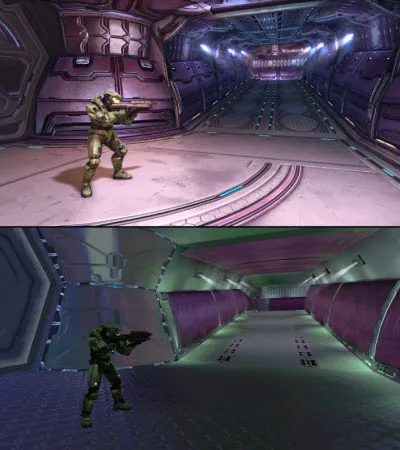
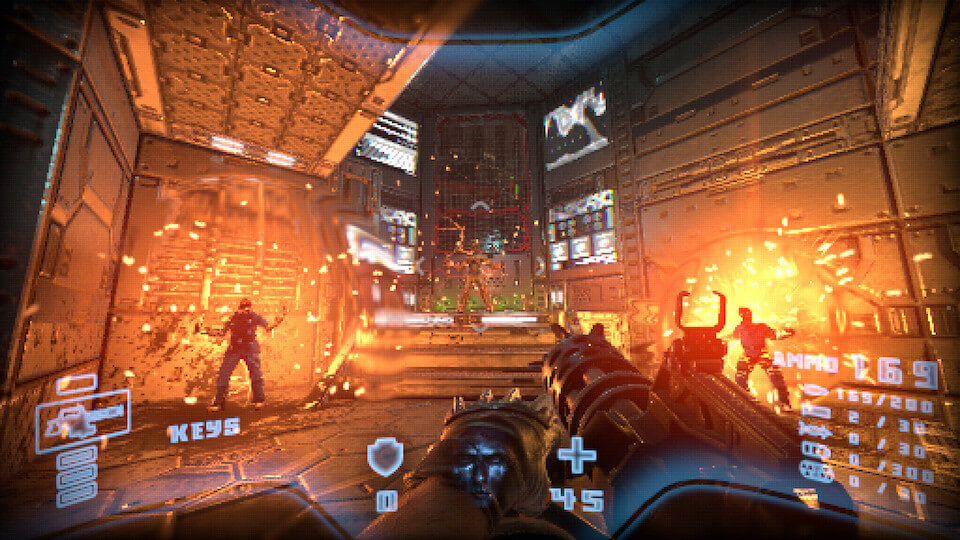
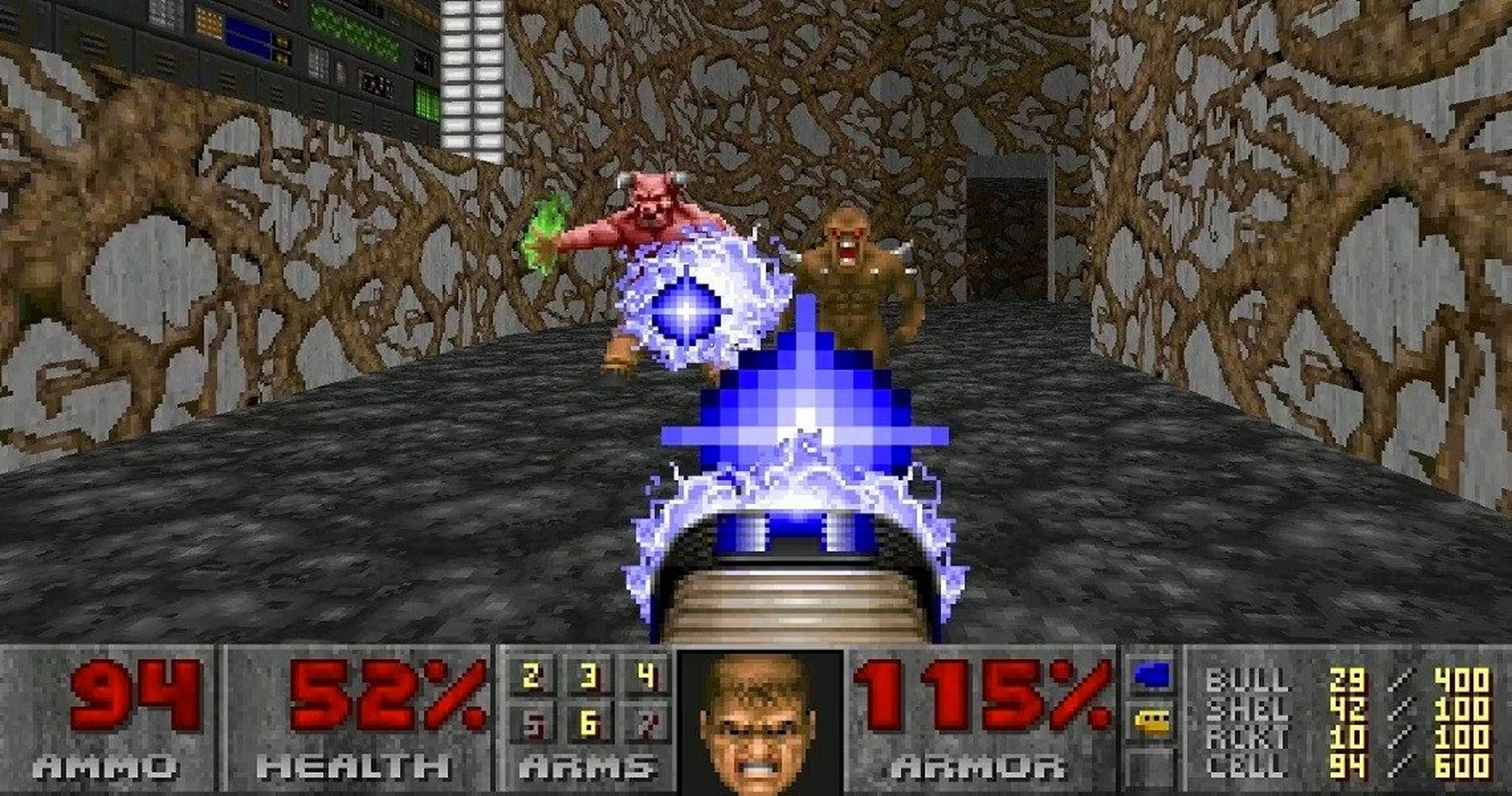
kasdeyaI just tried playing Prodeus recently and it made me realize that something I really value in a shooter is visual clarity. in Doom (1993) you can see like 3 pixels and know just based on the color palette that you’re looking at an imp. or you could see an item out of the corner of your eye and know immediately that it’s a red keycard. everything has not just a distinctive silhouette, but a distinctive color palette that pops from the background
a lot of modern shooters can’t do that (Prodeus included), because their priority is to look visually impressive instead of visually clear. they have all kinds of fancy shader effects, reflections, colored lighting, etc. and that adds way too much visual noise for the game to be able to clearly communicate what’s going on to the player
it reminds me of the difference between Halo 1 and Halo 1 Remastered, where the remastered version has more polygons and lighting effects but at the expense of a lot of visual clarity. another example that comes to mind is DoTA 2 vs. League of Legends
 1
0
7
1
0
7
kasdeya
kasdeyaI think they should’ve made BT look a little more distinctive because when he shows up I always think he’s an enemy Titan, but then he’s like “Pilot, my Optimus Prime levels are approaching nintey-five percent” and I’m like “oh hey BT I was 200ms away from shooting you in the face”
0
0
3
kasdeya
kasdeyaa lot of Titanfall 2’s story feels like it was written in a very rule-of-cool way where things make no sense if you think about them for more than a second, but I have to give them props for going out of their way to establish two details that most games would completely gloss over:
- why you can hear enemy comms
- why you need to use traversal mechanics like wallrunning to get around (most areas are designed for drones to traverse - not humans. so they aren’t human-safe and don’t have convenient walkways)
both of these details were honestly so refreshing when they happened
1
0
5
kasdeya
kasdeyaShow content
Kinks and Cantrips is a pretty telling microcosm of the D&D landscape to me because like okay
they made a book that has classes for various kinks
so they had to make class mechanics for how the kinks work
but D&D’s class mechanics are all about combat
so they had to figure out how you can use each of the kinks to kill people
so for example the mind control one is “you can make someone your enthralled slave and then they’ll fight and die at your command” like holy shit chill
3
0
5
kasdeya
kasdeyaShow content
also I just want to say that the time travel parts of Titanfall 2 are so fucking cool. I love how it makes sense in the story and it’s a cool mechanic and it makes you feel completely unstoppable and terrifying to the people you’re fighting, because from their perspective you’re just disappearing and reappearing at will
the battle dome section was honestly really creative and cool too. the very beginning of the game doesn’t give the best first impression (it feels very Call of Duty greybrown military shooter) but as soon as that’s over there’s so much creativity
2
0
4
kasdeya
kasdeyaBT from Titanfall 2 would be more likeable if he sounded less like Optimus Prime and more like a tachikoma. you can’t change my mind
1
0
1
kasdeya
kasdeyaShow content
#Titanfall 2 drinking game: take a shot every time someone says the word “pilot”. this will destroy your liver
1
0
2
repeated

Josie 


Josie@cutie.city
A post about prophecy in fiction and real life and what it means to me. 
All through fiction and non-fiction history the characters that have interested me the most are the prophets and oracles. You see the concept of being able to see through an “uncrossable” boundary (time, death, human utopia, etc.) and being able to come back or otherwise return that knowledge is endlessly interesting to me. 
I (generally) do not like time travel stores; I do not like reincarnation stories because they actually tear down these unbreakable boundaries. 
The thing that makes these characters so important is that they don’t always see across that boundary. In the story, sometimes they do, sometimes they don’t. But they ALWAYS exist in places where the normal cause and effect motivations that underlay everything we do have fallen apart. They see the person their talking to usually by asking questions or body language. They understand the cause and effect that brought the character there. Then, they provide the cause *or* effect that the main character needs to keep going. 
They never exist as the story’s main character (except the Bible) because they are not the story. The “main character” seeks them out when the main character has lost the cause/effect thread. The character is no longer motivated by a cause and need a new one OR the effect has been something unexpected and it needs to be reframed by an outside party. It’s always because the cause/effect thread has fractured in some way. 
When the thread fractures the main character or group of characters are aimless. They seek guidance, and usually end up in the arms of a prophet, oracle, soothsayer, etc. In fiction this is because the story *needs* to continue. In non-fiction, it's because people do not feeling aimless they might seek out a fortune telling. But, there are some people who see though fortune telling as "false" where do they go? 
Who do *you* reach out to when you feel aimless? Who do *you* reach out to when you feel lost? That person is reading you, and the cause and effect around you, they're seeing you and where you're lost. They're giving you a prophecy in a way that you will accept it. That method might be astrology, or tarot cards, or just a good conversation, or a project to do... They're your prophet.
Maybe I'll write a blog post about this and deconstructing some of my favorite prophet characters and what they're seeing that leads them to give the main character advice they do. Would that be interesting you all? 
0
2
1
repeated

Tattie
Tattie@eldritch.cafeWhich one of you Fedi weirdos* was at the Edinburgh trans rights demo holding the sign saying:
private String gender
notpublic const bool gender
* affectionate
2
6
1