

Posts
2785Following
119Followers
684I try to be very careful about CWing things. sometimes I make mistakes but I want to make my posts as safe to read as possible
I sometimes post NSFW/kinky/lewd things behind CWs. this should go without saying but if you're a minor please do not interact with anything lewd/NSFW that I post
I have very limited energy and am very shy so it might take me a long time to reply to messages sometimes, or I might not be able to reply at all. this is kind of an "output only" account for the most part, but I'm hopeful that I can change that over time
I sometimes use curly braces to {clearly show where a grammatical phrase begins and ends}, like that. you can think of them like parenthesis in code or math, except they operate on grammar instead
kasdeya
kasdeya
it’s really hard to distinguish between “I just haven’t learned how to do this well yet” and “this is inherently harder to use” but I’m definitely leaning towards the latter when it comes to Lisp’s syntax
 0
0
 0
0
 2
2
kasdeya
kasdeyaI think my current thoughts are: matching parenthesis is very very error prone and often leads to errors that are extremely difficult to track down. also it’s very difficult to read or write this language. both of those are very serious downsides
it seems like Rust’s macro system lets you operate on trees of data, instead of individual tokens, which sounds almost as good as Lisp’s macro system
Lisp’s syntax is very very simple but that comes at the cost of both readability and writeability. it does let you make macros in a straightforward way, which is very very cool, but so does Rust from what I understand. Lisp is definitely a dramatically worse language than a hypothetical scripting language that has Rust’s macro system
but, I don’t think a language like that exists yet, so instead Lisp is… a very painful tradeoff, and maybe useful for niche cases when you want to create your own DSL and metaprogramming in a language like Python or Lua isn’t good enough
1
0
2
kasdeya
kasdeyaShow content
one thing that really trips me up about Lisp syntax is dealing with comparison operators like > and <. for arithmetic operators I can kinda deal with them by thinking about them like this:
(+ 1 variable) ; this plus-ones the variable
as opposed to this:
(+ variable 1) ; this applies plus to the variable and one (much harder to think about)
but with comparison operators:
(< 1 variable)
;; hmm okay so (< 1 variable) means (variable < 1) right? or wait no it's (1 < variable), isn't it? it doesn't less-than-one the variable, it greater-than-ones the variable... I think?
super confusing. I keep vacillating between “Lisp’s syntax is actually genius” and “macros are cool and the syntax is simple but nothing is worth the tradeoff of how hard this is to read and write”
1
0
1
kasdeya
kasdeya@salad_bar_breath omg I had to look this up. I’ve never heard of a hot dish before in my life
1
0
1

 repeated

winter woof 
eclairwolf@tech.lgbt
crying bc i just learned they moo when they're happy
https://www.youtube.com/watch?v=4uh8nJGGbDI
1
3
1
kasdeya
kasdeya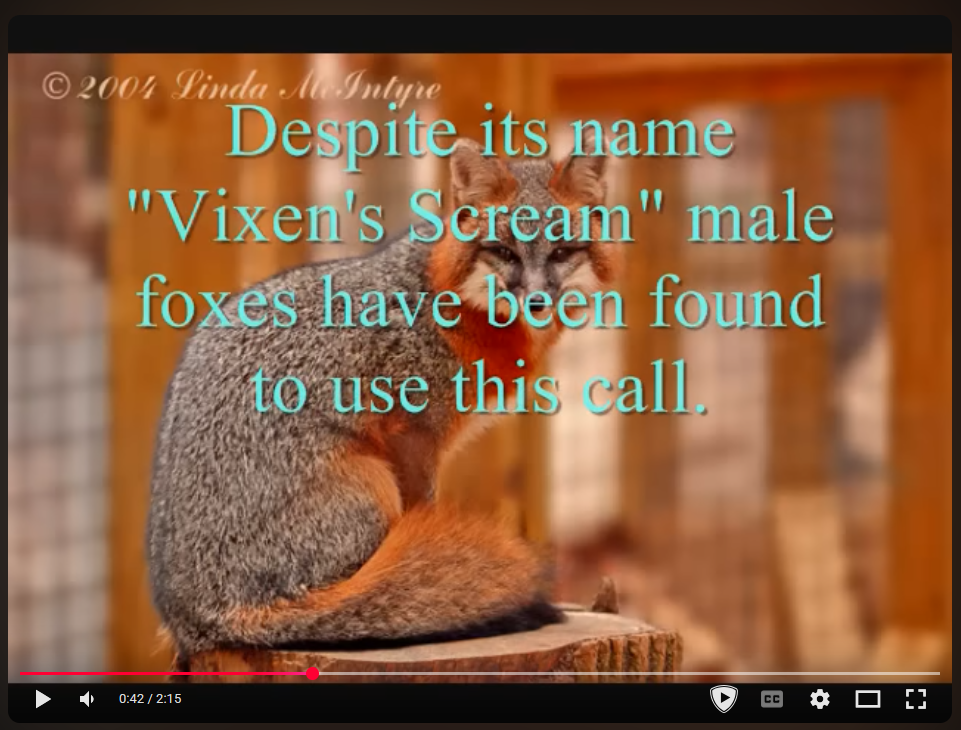 1
2
6
1
2
6
kasdeya
kasdeyawait I’ve been reading about Zig and on first glance it actually looks like exactly what I’d want?
0
0
0
kasdeya
kasdeyaI also really don’t like compiled languages just because they seem much more pragmatic and utilitarian than scripting languages. I would love to learn a compiled language with the same minimalist philosophy as Lua or Fennel but instead it seems like there are maximalist languages (or at least languages crammed with strange legacy behavior) like C, C++, C#, and Java
1
0
0
kasdeya
kasdeyaone of the worst things about compiled languages is that there’s no REPL. if you want to build an intuition for any feature of the language or any unfamiliar API you have to hand-write and trial-and-error some simple example code that you then compile and run multiple times. and there might not even be a pretty-printer built into the language
Rust, as much as I hated using it, is actually somehow able to have an unofficial REPL? I have no idea how that’s possible but it was actually very very helpful when I was trying to learn the language
1
0
1
kasdeya
kasdeyaholy shit is this a cool video. it’s not just satisfying from a technical standpoint - it’s also so aesthetic?
0
0
2
repeated

Cassandra is only carbon now
xgranade@wandering.shopPlease forgive the Amazon link, but this is the kind of thing I wish was a little less sketchy and a little more commonplace. Hostile interoperability is *good*, actually, as is finding uses (modulo safety concerns) for a product outside of what the manufacturer finds profitable.
Power tool battery systems are infuriatingly proprietary, and I can hardly think how much waste that creates.
1
1
1
repeated


 repeated


 repeated


kasdeya
kasdeya@nonfedimemes don’t worry bro I got you. you can use my web 3.0 fork of ffmpeg with an Electron frontend and AI-assisted transcoding support for just $3000/year
2
0
10
kasdeya
kasdeyawhat I’m trying to say is that mainstream big-budget media is not something that’s open and vulnerable. I don’t think anyone is expressing their hopes and dreams through Star Trek: Discovery character arcs. and that lack of vulnerability and passion means that it probably isn’t especially painful for the people involved to hear criticisms of their work: because it’s a job to them and not something that they put a piece of their soul into
and even it is painful for them to hear criticisms, me complaining about their work on Fedi is not going to hurt them because they’re never going to even notice my existence. if someone can make a convincing argument for why me posting like this would cause meaningful harm then I’ll try to stop but I don’t think it’s harmful at all right now
compare that to calling someone “cringe” and laughing at them for posting hand-drawn art of their OC. that is dramatically more likely to cause real, lasting harm. and that’s the distinction that I’m trying to get across
0
0
0