

Posts
3011Following
122Followers
695I try to be very careful about CWing things. sometimes I make mistakes but I want to make my posts as safe to read as possible
I sometimes post NSFW/kinky/lewd things behind CWs. this should go without saying but if you're a minor please do not interact with anything lewd/NSFW that I post
I have very limited energy and am very shy so it might take me a long time to reply to messages sometimes, or I might not be able to reply at all. this is kind of an "output only" account for the most part, but I'm hopeful that I can change that over time
I sometimes use curly braces to {clearly show where a grammatical phrase begins and ends}, like that. you can think of them like parenthesis in code or math, except they operate on grammar instead
 repeated


 repeated

Steve Hayman 🇨🇦🇬🇱
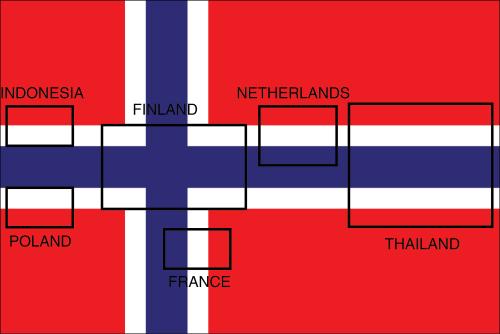
shayman@cosocial.caOne reason Norway does so well at the Winter Olympics is that their flag contains the flags of six other countries, which confuses the scoring system.
https://www.futilitycloset.com/2012/02/17/united-nations-2/
 0
4
0
4
 2
repeated
2
repeated

legally distinct spherical ghost
fen@zoner.worki always admired those “engineer” characters in media who could cobble something together from the spare parts in the junkyard that were lying around into a useable device the service the furthering of the plot and get the protagonists out of a sticky situation.
1
2
1
kasdeya
kasdeyaI’ve been kind of obsessed with Parcel Simulator lately and I definitely recommend giving it a try if you:
- are autistic about organization
- like sorting things
- like incremental/automation games
it’s basically like Papers Please except you’re sorting packages, and over time you unlock ways to automate more and more of the package sorting. it is so addictive and it’s so satisfying to automate away a particularly annoying step in the package inspection process
0
0
5
repeated

eli (ˈe̝ːli), vampire kitsune
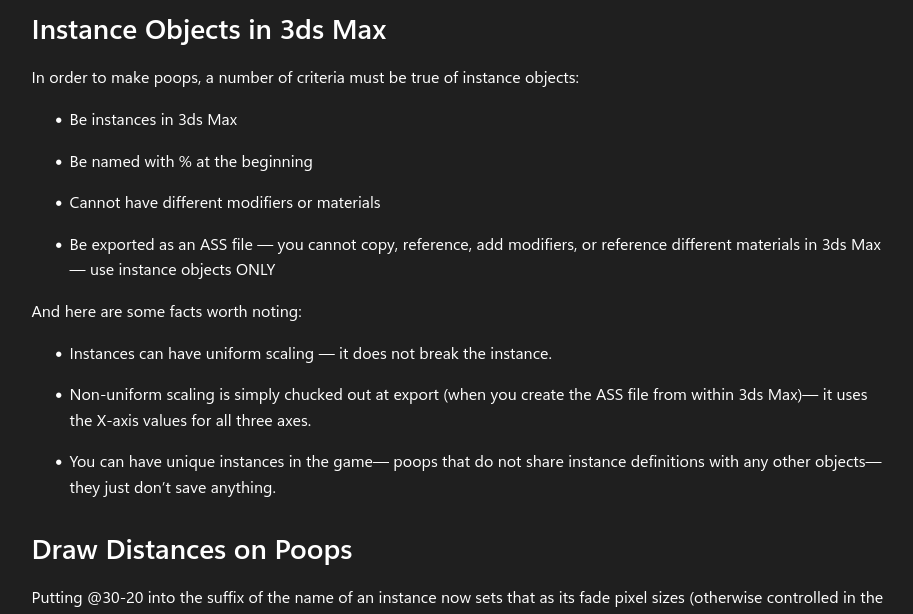
rowanunfriendly reminder that halo uses .ass files which contain poop objects. in case you need documentation, microsoft has you covered
 1
5
16
1
5
16
kasdeya
kasdeyarandom question but, when using a #Lisp how do I look up forms to use? like for example let’s say that I’m new to Scheme and I want to know how to get input from the user, and then turn that input into a number
how would I look up the names of the forms that would do those things for me?
with Janet I went through all ~360 top-level forms and created a categorized cheat sheet for myself, with categories like “for handling errors” and “for organizing data structures”. but that took hours and was really laborious, and most Lisps have way more than 360 top-level forms so that would be pretty impractical
5
0
3
kasdeya
kasdeyaI’m starting to think that maybe monads are only a useful concept in languages without union types, or languages without type-checking - and the reason why I can’t understand their value is because I don’t use the type of language that would benefit from them
I’ve heard a few different arguments for why monads are helpful but they all either don’t make sense to me (their explanation for why monads are better expects me to make an inference that I can’t) or they only make sense in a language with limitations that most popular scripting languages don’t have (for example, a language where any primitive can be null and you have to manually check all the time)
3
0
4
repeated
 repeated

Michelle
Aphelion@mastodon.sdf.orgThis is a
Conduit
Through
Which I
Can hold
You for
Just a
Moment.
Hello, you
Are loved.
#poetry
1
3
1
kasdeya
kasdeyaI hate feeling limited by a programming language. I want the language to adapt to how I conceptualize the problem, instead of being forced to adapt to how the language can conceptualize the problem. and statically typed languages feel really limiting to me. like you can only do the things that you can explain to the type system, and I feel like the type system is either:
- kinda dumb and very limited on purpose (C#, C)
- so complex that you basically have to learn a whole new branch of advanced math to understand how to use it properly (Rust, Haskell)
although on the other hand, I wonder if folks who are used to statically typed languages find dynamically typed languages to be scary because they let you get away with so much bullshit lol
6
0
6
kasdeya
kasdeyathey should make a Soulslike where dodge-rolls have no iframes whatsoever just to piss everyone off
5
3
14
kasdeya
kasdeyaShow content
@FoxFux I feel like I was made for this bingo lol
RE: https://kinkycats.org/@FoxFux/116038679929270686
 5
0
6
repeated
5
0
6
repeated




kasdeya
kasdeyaShow content
if you’re doing math or computer science, remember that the most important considerations when naming something are intimidation and inaccessibility. you want a name that has nothing to do with what it refers to, is ungoogleable, and makes you sound really smart for knowing what it means. that’s why every concept in math is named after one of these things:
- a letter in a non-Latin alphabet (phi, pi, tau, epsilon, delta, aleph)
- a white man’s name (Mandelbrot set, Sierpinski triangle)
- one of the vaguest words in the English language (normal, function, value, set, natural, real)
- esoteric words that have nothing to do with what they’re naming (manifold, topology, matrix)
- made-up words that are designed to sound intimidating (idempotent, calculus, integral)
under no circumstances should you give a math concept an intuitive or approachable name. math is serious business and it’s important to make it hard to learn and scare beginners away
6
3
14
repeated
Draculo's Secret Castle
El_Draculo@secret.draculo.netDraculo is now streaming!! Come and join the fun!!!
Doom: Hideous Destructor Co-op !!
#retro #gaming #foss #linux #games #streaming #videogames #owncast
 0
2
0
0
2
0
kasdeya
kasdeyaShow content
petition to build a time machine so we can send all the MAGA folks to whichever period of American history they think is “greatest” so they can just die of cholera in the past and leave us the fuck alone
0
0
8
kasdeya
kasdeyaShow content
my perspective on “all stories need conflict” has shifted a bit
I used to think that it just wasn’t true, and it led to people shoehorning conflict (which I defined as basically fighting against others, oppression, abuse, or some situation that causes suffering) into every story
but it seems like when people talk about “conflict” in a storytelling sense they’re defining the term so loosely that it could apply to literally any story. for example in the story “I got out of bed” the conflict is between the main character and the force of gravity, or maybe their own tiredness
so I still think that “all stories need conflict” is harmful but I also don’t think it’s falsifiable. I just think it’s (IMO) a bad way of framing storytelling because it defines all stories in terms of drama and fighting and enmity and other nasty things - which leads writers to shoehorn those things into every corner of every story and really play them up as well
personally I think that a good story is a collection of cool ideas and interesting questions. the characters are a way of showing those things to the audience and ideally also exploring those things in more depth
the characters need to want things, and those things need to cause them to encounter some cool ideas/questions. ideally they should also linger on those things and engage with them in a way that shows the full potential of how cool they can be
now that I write this out, I wonder if a good way to write a story would be:
- make a list of related ideas and questions that the writer is excited about
- use worldbuilding to make a world around those ideas/questions
- come up with some characters (ideally incorporating even more cool ideas/questions) who want something(s) from the world
- make the characters passionate about some of the cool things (that’s an easy way to get them to engage with them)
- make it so that between them and the thing(s) they want, they’re faced with obstacles that require them to engage with even more of those cool things
so yeah I guess the kas version of “storytelling is about conflict” would be “storytelling is about exploring cool things”
and my ideal story structure would probably be something like:
- introduce the characters and what they want. at the same time, introduce the world/setting and establish some of the cool things baked into the world
- have the characters face and eventually overcome an obstacle that causes them to engage with more cool things. make sure it’s clear that the characters have gained more than they lost from the obstacle
- if you want to put more stuff in the story, go back to 2. otherwise go to 4
- the characters accomplish their main goal! explore the implications of that for a while before ending the story on a positive note
1
0
2
repeated

Diotima
tiefling@bardicperspiration.clubI am no longer the girl I was
But someone altogether new
Assembled from the pieces of
Everything I once was
And everything I have come to be
Yet incomplete
Still evolving
Into what, perhaps
I was always meant to be
https://tiefling.bardicperspiration.com/index.php/2026/02/08/evolving/
0
2
1
repeated
mg. kit
kit@m.tripulse.linkgenuine question: what is actually gained from DDR5 memory in a practical sense? theoretically much higher bandwidth, yes, but I don’t know how important that actually is for anything that matters
this will be long winded, sorry
on the average desktop/laptop, I’m not even sure DDR4 was a notable gain. the theoretical bandwidth was straight up identical in the early days, there wasn’t really a significant bump there until DDR4-3200 became commonplace, and even then, it’s not the kind of difference that will be noticed by anyone other than the 1% of people who know what that means, how to spot the difference, and actually do things that benefit from the difference. prefetch is the same, latency isn’t meaningfully different either. the biggest improvement that I can see is that the voltage was significantly lowered, which is cool I guess. I’m quite sure that most people could use a computer with DDR3 memory today and be completely fine, as long as the processor holds up, which is the real bottleneck here anyway
but DDR5? I just plain don’t know what it’s for. from the regular desktop perspective, it’s just annoying more than anything, and it created a brand new issue for novice pc builders to be terrified by, being extremely long memory training times where the computer is on but with a black screen for anywhere from a minute to many minutes. I’ve seen a lot of people rave about the “on-die ECC” that DDR5 has, but that is very much not what people think it is, regular DDR5 memory is no more stable than anything that came before it, that “ECC” is only there as a band-aid fix for the instability inherent to the incredibly high clock rates. the performance difference between DDR4 and DDR5 on the same processor (thanks intel for making alder lake compatible with both) looks to be between negligible and unnoticeable in all cases that a regular person would encounter, and while I’m sure there are some server workloads that would like higher memory bandwidth, I also happen to know that you can run basically any web software you want with a $20 single board computer, so I don’t care about that. and of course I am Very Aware of The Datacenters and what they do with the stuff these days
but in the end, the only thing I know is that I don’t know. there must be some real, actual, good reason for this, other than just making numbers go up. is there some kind of real, actual science being done that eats up memory bandwidth that DDR5 was a revelation for? anything other than machine learning, neural networks, or computer vision
the more I look at modern computing, the more I begin to feel that computing died a decade ago. performance keeps increasing on paper, but in the real world, it matters less and less, without considering the added problem of software being made worse as the concept of optimization dies at the hands of productivity
if there really is an honest to goodness practical use for DDR5 that truly justifies its existence in a way that I can see and can be explained to the average non-techy person as well, then maybe I’ll become a little less pessimistic
but on the other hand, I kind of feel like a much cooler path forward for computing at this point would be for older architectures to be revived and reworked with a laser focus on power efficiency. that would be great for everyone. and if super high powered and high bandwidth stuff really is still needed for some things, it can stay in the datacenter as its own separate thing
2
1
1