
Eivind (like the Terrible) 🎄
eivind@fribygda.no
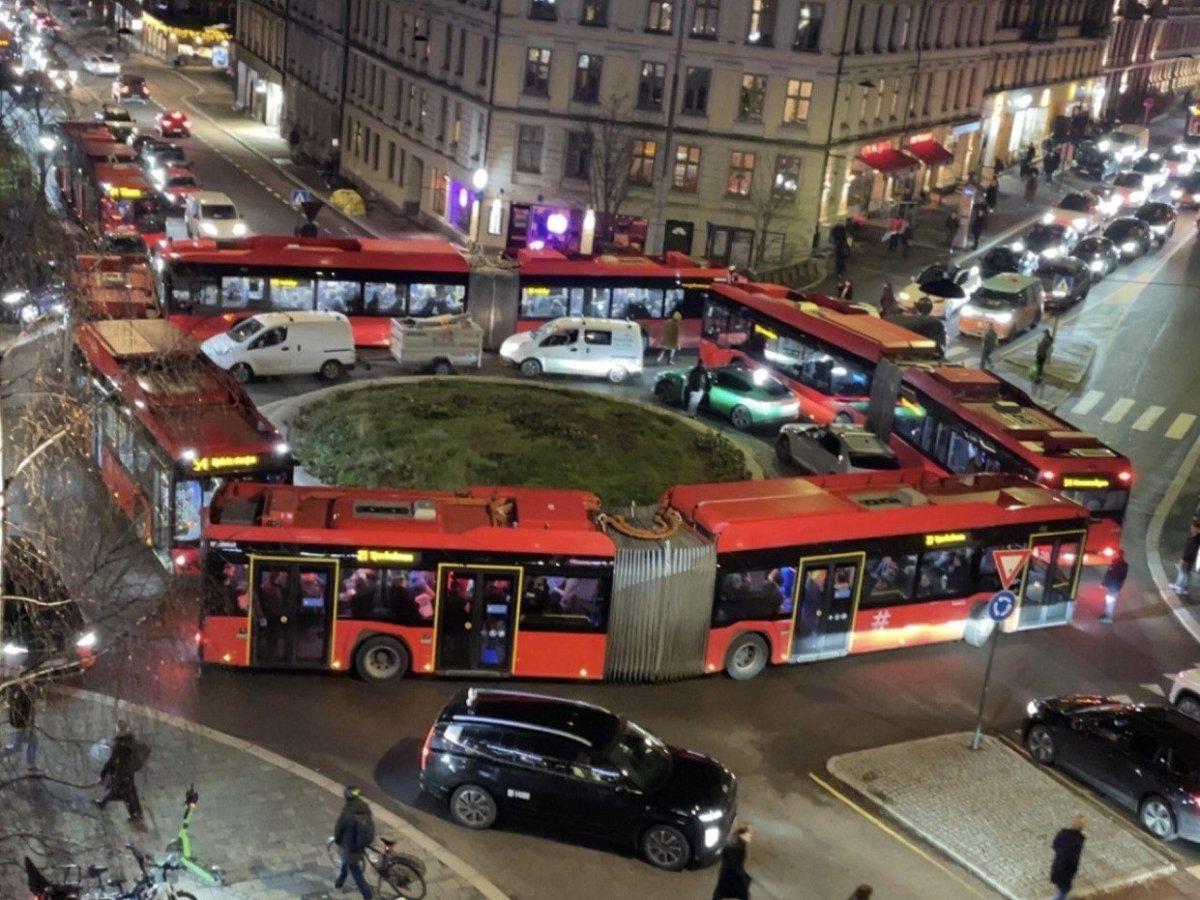
Four bendy buses managed to enter a roundabout at the exact same time from four different directions in Oslo yesterday afternoon and get properly stuck, each bus blocking the exit for the one behind it. #BigBusStuck
 8
8
 15
15
 2
2




aburka 🫣
aburka@hachyderm.io
1
0
1

Chris Chenukah Candles $42
secretasianman@types.pl@eivind @krismicinski that's amazing, you can see all of them holding a fork on their left
0
0
0


The Doctor
drwho@masto.hackers.town
5
0
1



twigs 
Primavera@void.lgbt
0
0
1

Rolf Blijleven 🔻
RolfBly@mastodon.social@aburka @drwho @kasdeya @trochee @eivind
Before about the 80's we (Netherlands) used to have some roundabouts where all incoming traffic from the right, has the right of way. Which is a stupid system.
We then adopted the UK's system, where traffic on (or leaving) the roundabout has the right of way.
Eureka.
Some clever dude once pointed out to me: the roundabout automatically clears itself.
Does that help?
6
0
1


Rolf Blijleven 🔻
RolfBly@mastodon.social
0
0
1
Dave Mc
guigsy@mstdn.social@RolfBly @geert @aburka @drwho @kasdeya @trochee @eivind when traffic levels get too high or downstream bottlenecks queue onto the roundabout, or flows are just too unbalanced to allow reasonable entry flow, roundabouts stop working efficiently. Signals can help, but it's just managing congestion at that point.
2
0
0

Diabetic Heihachi
DavBot@nerdculture.de@eivind
This brings to mind a hilarious article from the hard times.
https://thehardtimes.net/culture/entire-town-killed-after-installation-of-roundabout/
2
0
0
Eivind (like the Terrible) 🎄
eivind@fribygda.no@DavBot haha, they *do* feel dangerous in the US where each individual has their own idea about how to navigate this newfangled traffic obstacle.
0
0
0

ClickyMcTicker
ClickyMcTicker@hachyderm.io@geert @RolfBly @aburka @drwho @kasdeya @trochee @eivind The modern roundabout (which utilizes exit-priority) was created in England, yes.
https://en.wikipedia.org/wiki/Frank_Blackmore
He also created the mini-roundabout, which is the one which lacks an impassable center. It’s just paint or bumps which allow a significantly smaller footprint but can still accommodate large vehicles.
Any older rotaries or traffic circles use lights or entry-priority.
0
0
0


WesDym
wesdym@mastodon.social@kasdeya There are thousands of rotaries in the US. But thanks for parroting an ancient trope that was never clever to begin with.
0
0
0
WesDym
wesdym@mastodon.social@rowan Any actual 'average' of Americans probably doesn't match any given SINGLE American, due to enormous diversity, including in mindset. Where I am in the US, even most stupid people manage these just fine.
0
0
0

hallunke23 🇺🇦
hallunke23@troet.cafe
Interesting. Here in Germany, we have both:
• Roundabouts (marked by a roundabout sign) are subject to the “incoming traffic must yield” rule.
• Circular intersections (which lack a roundabout sign) are usually subject to “right before left” which means that incoming traffic has right of way.
The latter version, however, is very rare.
@RolfBly @aburka @drwho @kasdeya @trochee @eivind
 0
0
0
0
0
0

Dave Mc
guigsy@mstdn.social@Pionir @RolfBly @geert @aburka @drwho @kasdeya @trochee @eivind If there's queuing back through a roundabout, then it doesn't really matter how polite drivers are. If I'm going for the third exit and there's a gap right now, several cars could have added to that queue by the time I get there and I'll end up stopped on the roundabout. If I let cars out, at what point does the car that wants to take the first exit push their way out? They get a turn too, right?
0
0
0



Baloo Uriza
BalooUriza@social.tulsa.ok.us@kasdeya Depends regionally. Along highways like Route 66 or the Lincoln Highway that predate rural electrification, you can find the historically nasty intersections the highway turned in because a roundabout was deployed a hundred years ago. And on Route 66, some of the slower signalized intersections have been converted more recently because it beats being on flashing red for a week after a thunderstorm.
0
0
0

Last Continue
LastContinue@labyrinth.zone@rowan @kasdeya @trochee @eivind @aburka @drwho
being from a state that has plenty of them: can confirm
A couple of times a year for work, I have to travel to another city in another state, that for some odd reason, is loaded with roundabouts (the locals explain it as The State DOT works with a local University to experiment on the entire city, but sounds like Tinfoil Hats to me)
I can handle them, but every time I’m behind another out-of-state plate, it’s a 50/50 chance they’ll stop IN THE MIDDLE OF THE ROUNDABOUT. Honking only makes them freeze in fear or worse (I’ve seen people freak out and plow over the landscaping in the middle with their giant SUVs in an attempt to escape. Also terrifying is them TRYING TO REVERSE OUT OF IT) so the best thing it just to let them figure it out, agonizing second-by-second.
1
0
1



@kimlockhartga
You can design them to allow extra-long vehicles to drive over parts of the middle circle, using “truck aprons”. Basically beveled edges instead of straight curb stones. That helps a bit.
@kasdeya @trochee @eivind @aburka
1
0
0



 AIX
AIX



Ko Simon toku ingoa 
SimonCHulse@mastodon.nz
@RolfBly @aburka @drwho @kasdeya @trochee @eivind in NZ and Australia we both still have the same rule except on the left to match our roads.
When my dad taught me about roundabouts as a boy my first question was “what happens if a car wants to go at all four points at the same time?” He told me it rarely happens.
As an adult driving I experience it at least once a month, and the answer is someone has to break the law to ease the deadlock.
0
0
0


Felix 𝄢
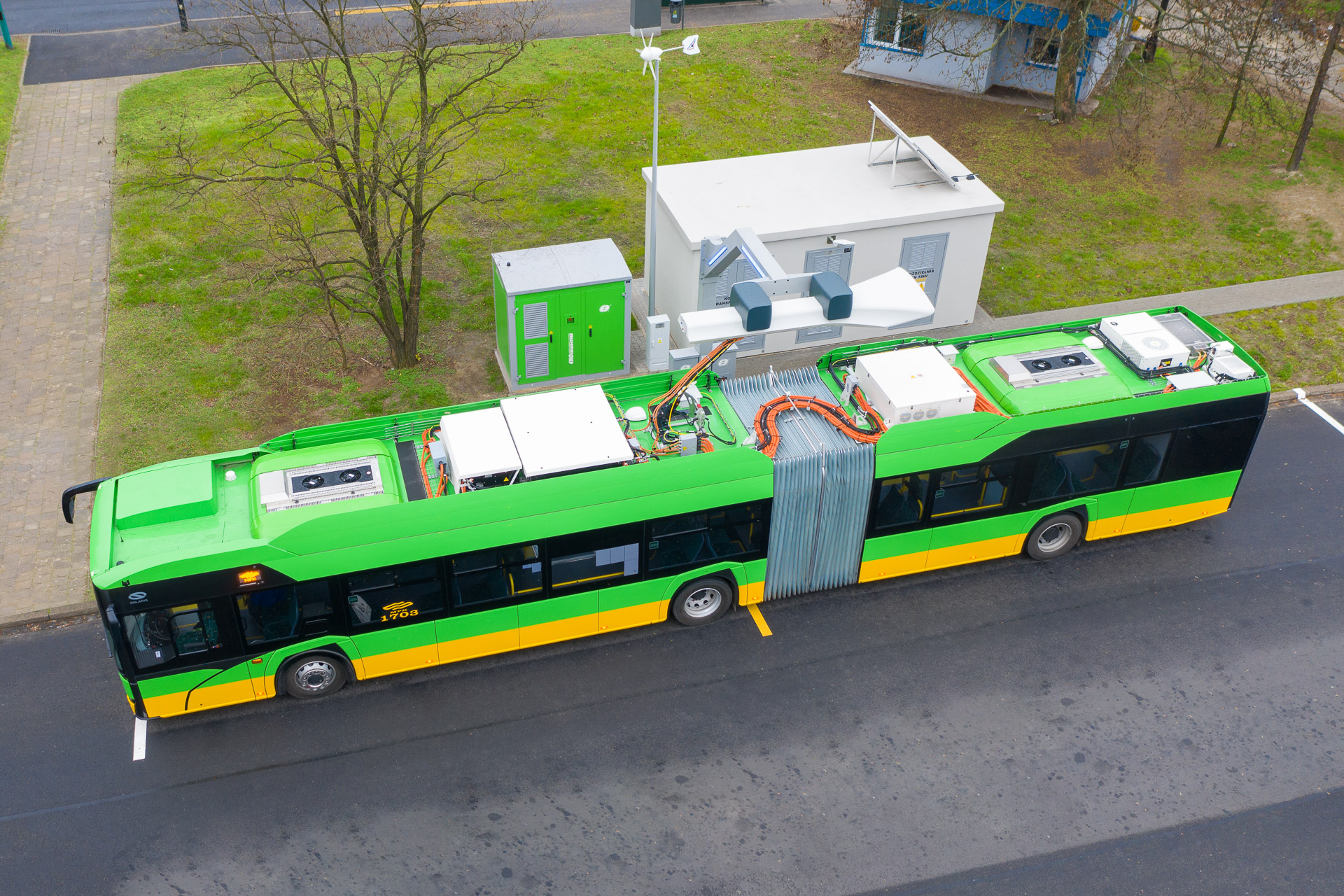
thegcat@kif.rocks@eivind @leyrer Yes, I had expected it to be some sort of electric connection between front and back. Wikipedia doesn't know Oslo got those though ;-) https://en.wikipedia.org/wiki/Solaris_Urbino_18_electric
1
0
0
Felix 𝄢
thegcat@kif.rocks@eivind @leyrer the virtual tour for the Urbino 18 electric on https://www.solarisbus.com/en/vehicles/zero-emissions/urbino-electric has some nice top views, they do look like high power electric cables indeed.
0
0
0

RealGene ☣️
RealGene@hachyderm.io@binford2k @RolfBly @geert @aburka @drwho @kasdeya @trochee @eivind
Those are often former four-way intersections that were converted to roundabouts/rotaries to reduce collisions.
Unfortunately, these retrofits mean that the traffic enters and exits at a right angle, not a tangent to the circle, so you have to come to a complete stop before entering, because it's near impossible to match the speed of the traffic already in the circle when you have to turn 90°.
1
0
0